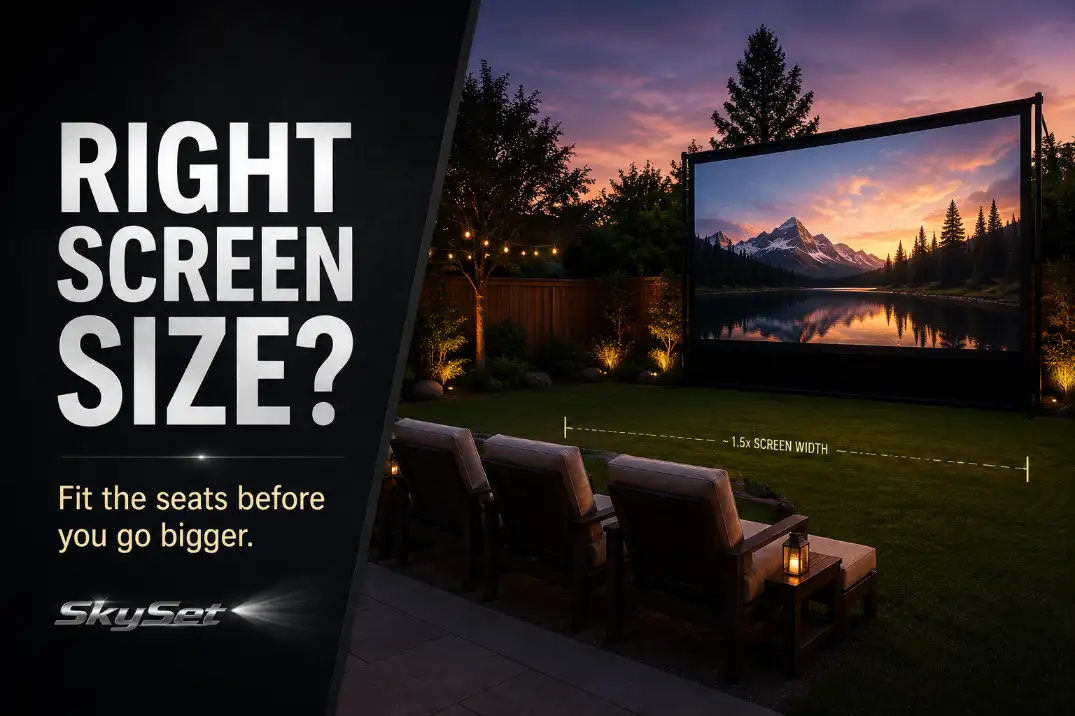
Backyard screen size is a seating decision before it is a screen decision. The number that works is controlled by where people sit, how wide the audience spreads, how bright the image stays after dusk, and whether the screen can be set up without turning movie night into a chore.
That is why the best screen size for a backyard movie night is not automatically the largest screen that fits the yard. A 120-inch screen can feel right in a deeper lawn setup.
The same size can feel oversized on a small patio where the first row is only 6 or 7 feet away. A smaller screen can also look better if it keeps the image brighter and easier to watch.
Use screen size as a layout filter. Start with viewing distance, then check screen width, brightness, first-row comfort, second-row behavior, and setup effort before going larger.
Start With Viewing Distance
The first sizing move is to measure from the main seats, not from the back of the yard. The main seats are the chairs, sofa, blanket area, or patio row people will actually use for most of the movie.
A close patio setup needs a more restrained screen because viewers have less room to take in the image. A deeper lawn setup can handle a larger image, but only if the projector, screen height, and seating zone still support it.
For the broader order of the night, this screen-size decision should sit inside the full backyard movie setup, not replace it.
| Main viewing distance | Practical screen range | Works best when | Watch for |
|---|---|---|---|
| 6–8 ft | 70–90 in | Small patios, close seating, kids near front | Oversized image and neck movement |
| 8–10 ft | 90–110 in | Compact backyard seating or patio-lawn edge | Side seats drifting too wide |
| 10–12 ft | 100–120 in | Standard backyard movie row | Brightness loss if lights stay on |
| 12+ ft | 120 in or larger | Deeper lawns with stable setup space | Bigger frame, wind, storage, dim image |
These ranges are starting points, not a universal rule. A 100-inch screen can be generous in one yard and modest in another. The difference is how that size behaves from the seats that matter.
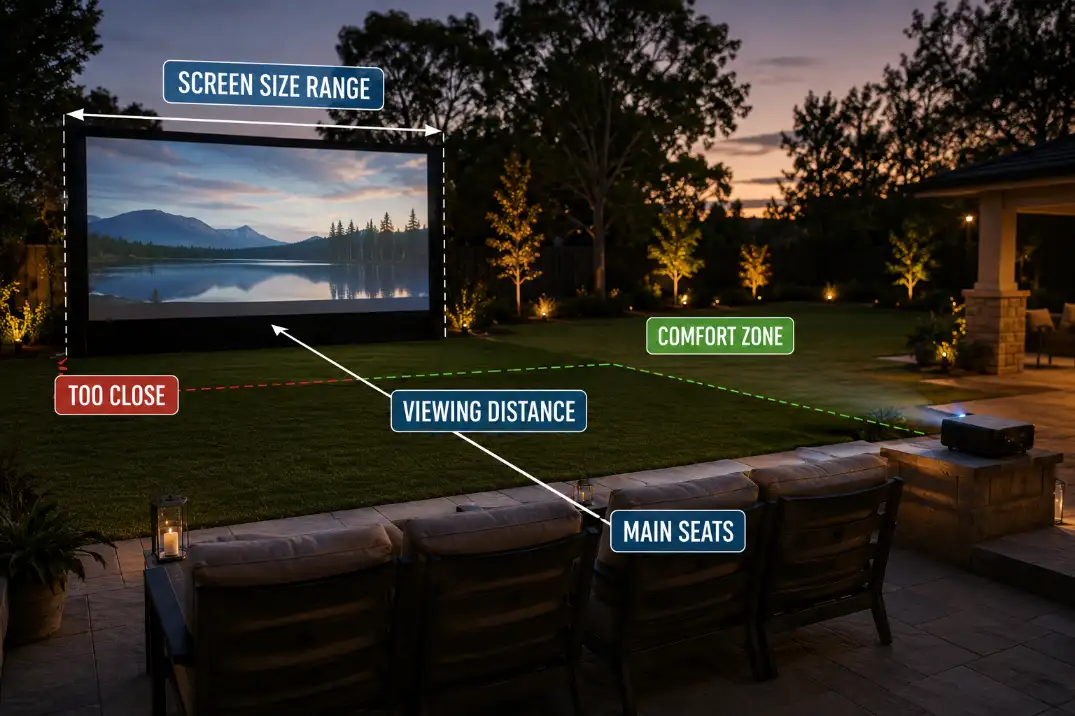
Choose a size range first, then narrow it. If your main seats are 8 to 10 feet back, you may be comparing roughly 90 to 110 inches. From there, seating width, brightness, and front-row comfort decide whether you stay smaller or move up.
Match Screen Width to the Seating Zone
Screen width is the more useful backyard measurement because it tells you whether the image matches the people watching it. Diagonal size sounds simple, but the actual screen width is what fills the patio edge, lawn opening, fence line, or portable frame footprint.
The screen should serve the main seating zone, not the entire yard. If chairs are scattered far left and right, a larger screen does not automatically fix the layout. Side seats may still watch from an angle, and the center seats may remain the only truly comfortable view.
A better test is to stand where the main row will sit and look at the screen location. If the screen feels centered for that group, the size is probably workable. If you are choosing a larger screen only because the seating is spread out, tighten the seating zone first.
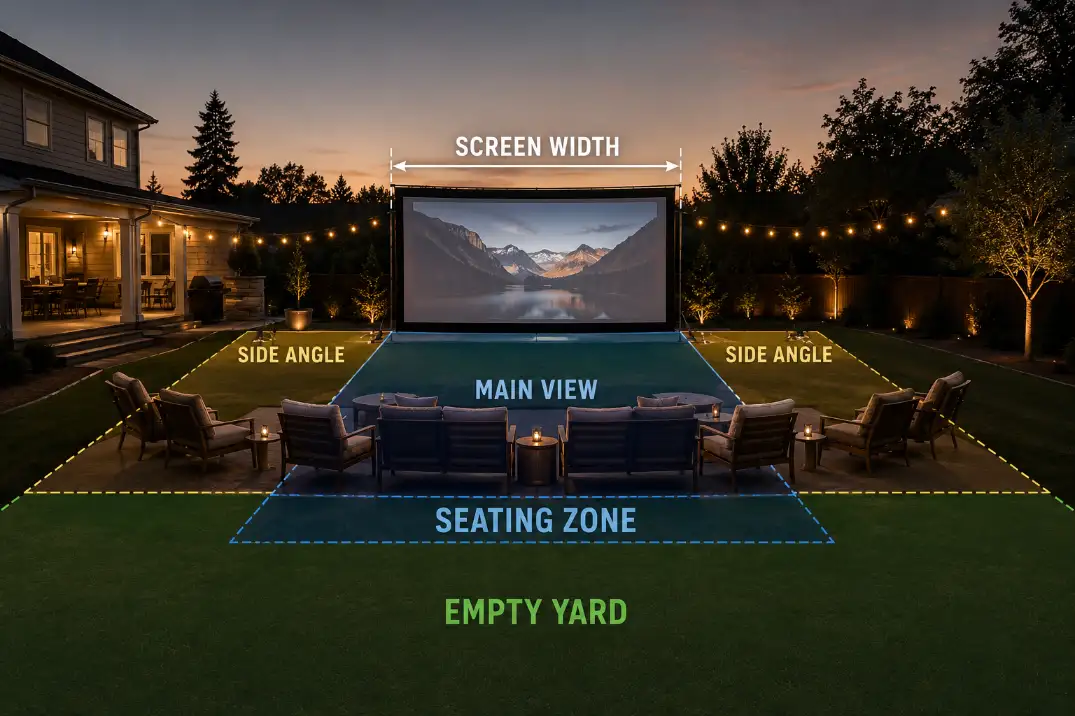
This matters most in narrow yards and patios. A screen that fills the space from one edge to the other may look impressive before the movie starts, but it can make the layout stiff. People still need room to walk behind chairs, reach snacks, adjust seats, and move without crossing the projector beam.
The screen does not need to dominate every inch of the yard. It needs to make the main view feel intentional.
Avoid Oversizing for Projector Brightness
The brightness limit often stops the screen size before the yard does. When the image gets larger, the same projected light is spread over more surface area, and outdoor conditions make that weakness show quickly.
Dusk, patio lights, string lights, house windows, landscape lighting, and nearby street glow can all reduce the perceived strength of the picture. If the image already looks soft or gray at 100 inches, pushing it wider may make the night feel worse, not more cinematic.
Placement Warning: Do not choose the largest screen your yard can physically fit until you have checked the light around the screen. A slightly smaller image that stays bright usually feels better than a huge image that fades under patio or house light.
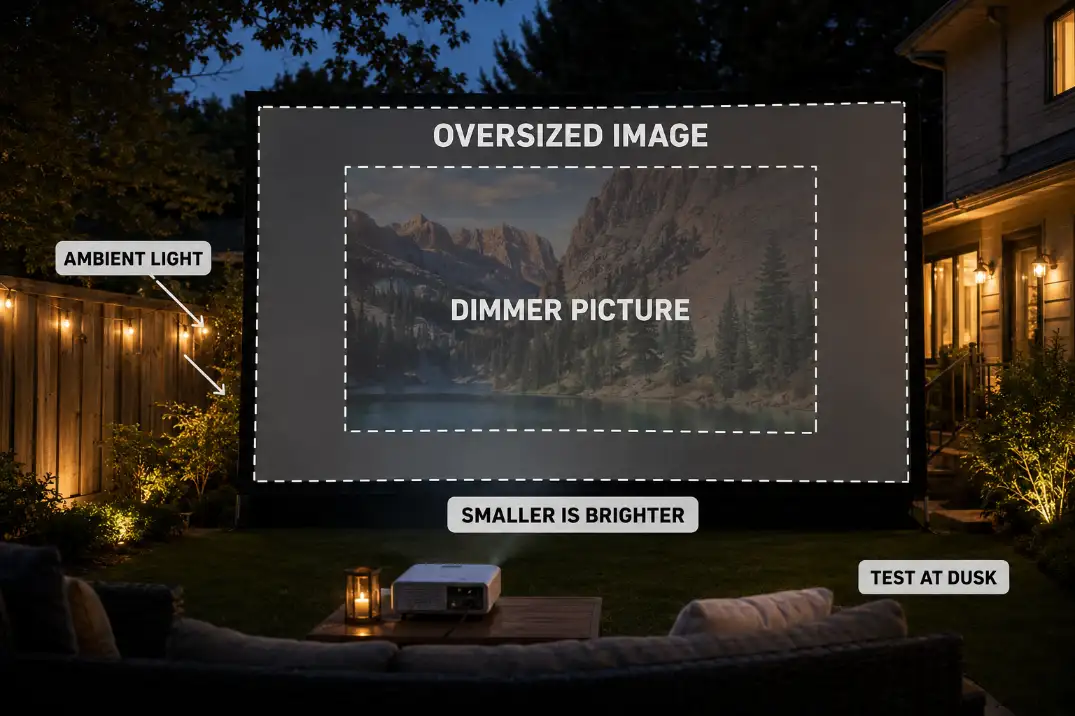
If patio lighting is part of the space, treat it as a screen-size limit. The issue may not be the projector alone. It may be that the screen is too large for the light conditions. If the image starts looking washed out as the screen grows, use why outdoor projector images look washed out as the next diagnostic path instead of simply chasing a bigger image.
A good backyard screen size should survive the real lighting conditions of the night. If it only looks strong after every surrounding light is turned off, it may not match how the space is actually used.
Keep the First Row Comfortable
The closest row is the screen-size truth test. If that row has to tilt back, scan too much from side to side, or keep shifting posture, the screen is probably too large for the layout.
This problem often appears when the screen is chosen for the back row first. Adults farther back may like the larger image, but kids on blankets, low lounge chairs, or front-row camp chairs can end up too close. The screen looks impressive from the patio door and tiring from the seat.
Before increasing the screen size, try moving the first row back. If the row cannot move because of a patio edge, fire pit, walkway, deck step, pool fence, or projector beam path, the screen size should come down.
The first row does not have to be perfect for every viewer, but it should not become the sacrifice zone. A backyard movie night works best when the closest comfortable seats are still good seats.
Plan for Kids and Second Rows
Second rows should shape the screen decision, not take it over. Backyard seating is rarely a clean theater layout: kids may sit low on blankets, adults may sit behind them in taller chairs, and extra chairs may appear after guests arrive.
That does not always mean the screen needs to be larger. Sometimes the better move is to stagger seats, raise the screen slightly, or keep the front row low so the second row can see over it. A slightly larger screen can help deeper rows, but only if it does not punish the front row or weaken the image.
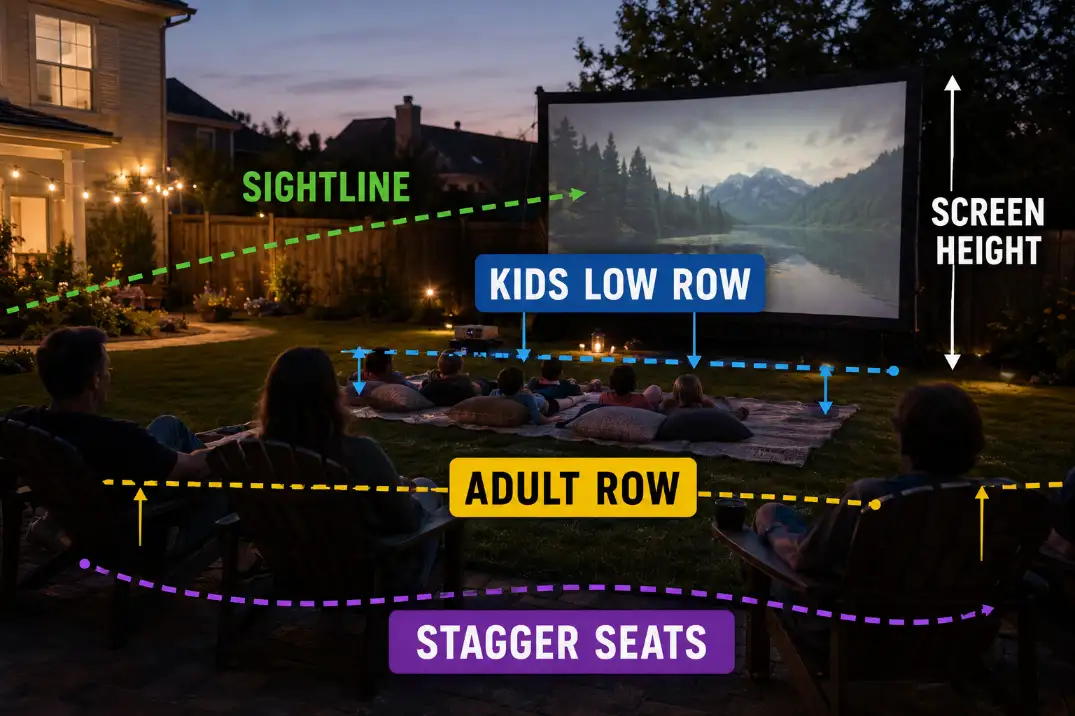
If family viewing is the normal use case, screen size should support mixed seating rather than one ideal center chair. A family setup often needs a forgiving viewing zone more than a massive image. That is why a separate family backyard movie night setup can matter after the size range is chosen.
Use this quick decision matrix before going larger:
| Yard or seating condition | Better screen-size move | Why it works | Avoid |
|---|---|---|---|
| Kids sit low in front | Moderate screen with clear height | Keeps front row comfortable | Raising size only for adults |
| Adults sit behind kids | Stagger seats before upsizing | Improves sightlines without dimming image | Tall chairs directly behind low seating |
| One main row only | Size for that row first | Simplest comfort target | Designing for imaginary extra rows |
| Wide mixed seating | Tighten the seating zone | Improves angle and shared view | Huge screen for scattered chairs |
The second row is a real constraint, but it is not permission to oversize the whole setup. If the main row becomes uncomfortable, the screen is too large for the event pattern.
Choose a Size You Can Actually Set Up
The final screen-size cap is setup friction. A screen can fit the viewing distance and still be the wrong size if it is too wide to carry, hard to square, difficult to tension, awkward to store, or unstable in light wind.
This is where the decision becomes less about inches and more about repeat use. A screen that needs two people, extra anchoring, a perfect lawn spot, and a long teardown may only come out once or twice. A slightly smaller screen that sets up cleanly may become the one the family actually uses.
SkySet Setup Note: The best backyard screen size is not the most impressive size on the first night. It is the largest size that remains comfortable, bright enough, stable enough, and easy enough to repeat.
Think about the full footprint, not just the visible image. Portable frames need side width. Inflatable screens need open ground and anchoring space. Fixed or semi-permanent screens need a location that does not fight wind, lights, sprinklers, or walking routes.
If you are deciding between a screen that comes out occasionally and one that stays part of the yard, fixed-frame vs portable outdoor movie screens is the more useful next decision than simply going bigger.
The practical answer is simple: choose the size that fits the main seats first, stays bright under your real evening light, keeps the first row comfortable, gives second rows a fair view, and can be set up without friction. When those conditions hold, the screen feels big for the right reason.
For a neutral throw-distance and screen-size check, use ProjectorCentral’s Projection Calculator Pro.