Fixed Frame vs Portable Outdoor Movie Screens

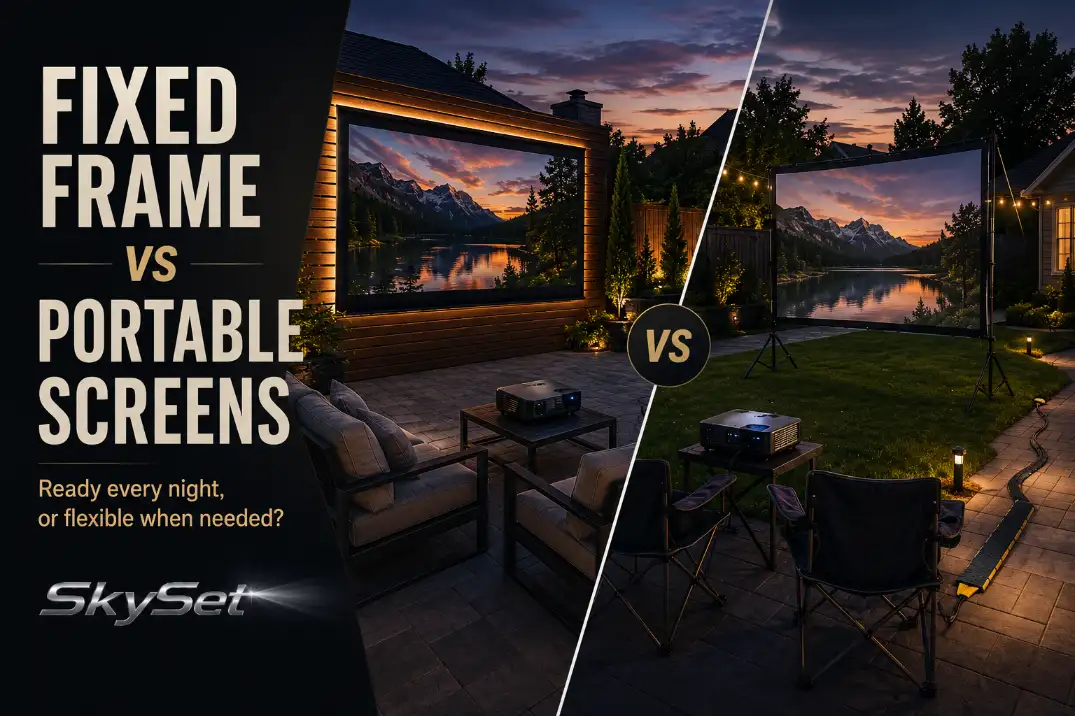
Fixed-frame and portable outdoor movie screens compared in a realistic backyard setup.

Fixed-frame and portable outdoor movie screens solve different backyard problems. A fixed-frame screen is about readiness, repeatability, and a cleaner image surface once your outdoor theater location is proven. A portable screen is about flexibility, storage control, and being able to move movie night around the yard. The mistake is treating this as a simple … Read more

How to Prevent Wrinkles in Outdoor Projector Screens

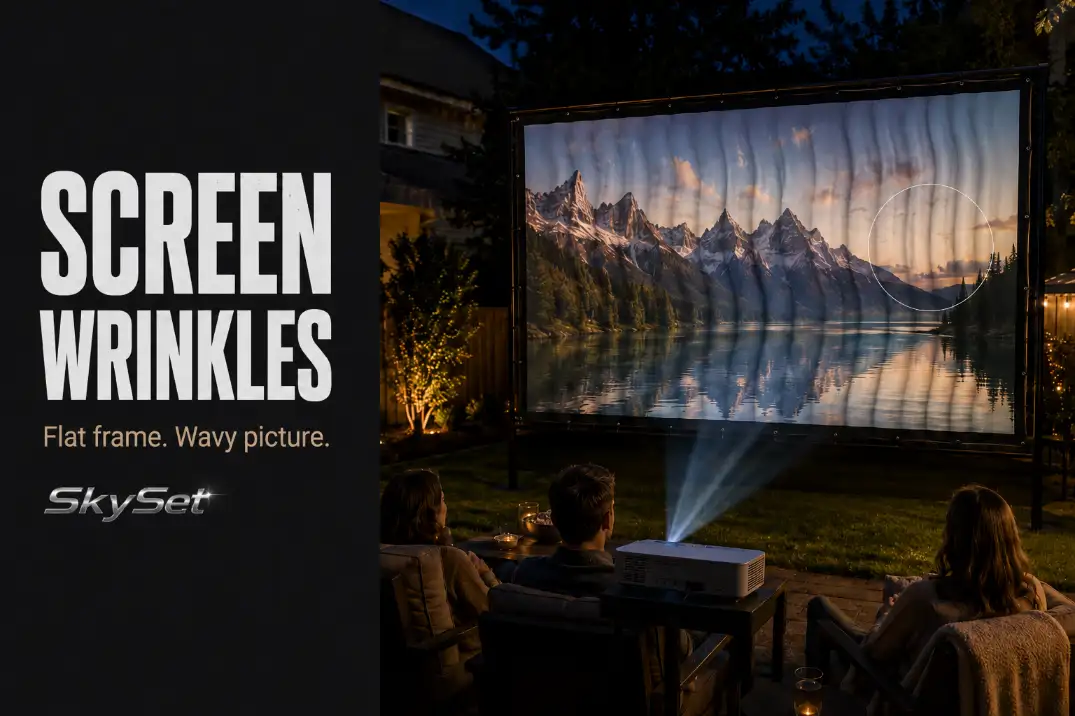
Outdoor projector screen at night with visible wrinkles distorting the projected movie image.

Outdoor projector screen wrinkles usually come from uneven tension, fold memory, damp storage, or a screen material that no longer relaxes flat. The fastest prevention routine is simple: open the screen 20–30 minutes before movie time, square the frame, tighten the fabric evenly, and never pack the surface while it is damp or cool to … Read more

Outdoor Movie Screen Materials Compared for Backyard Setups

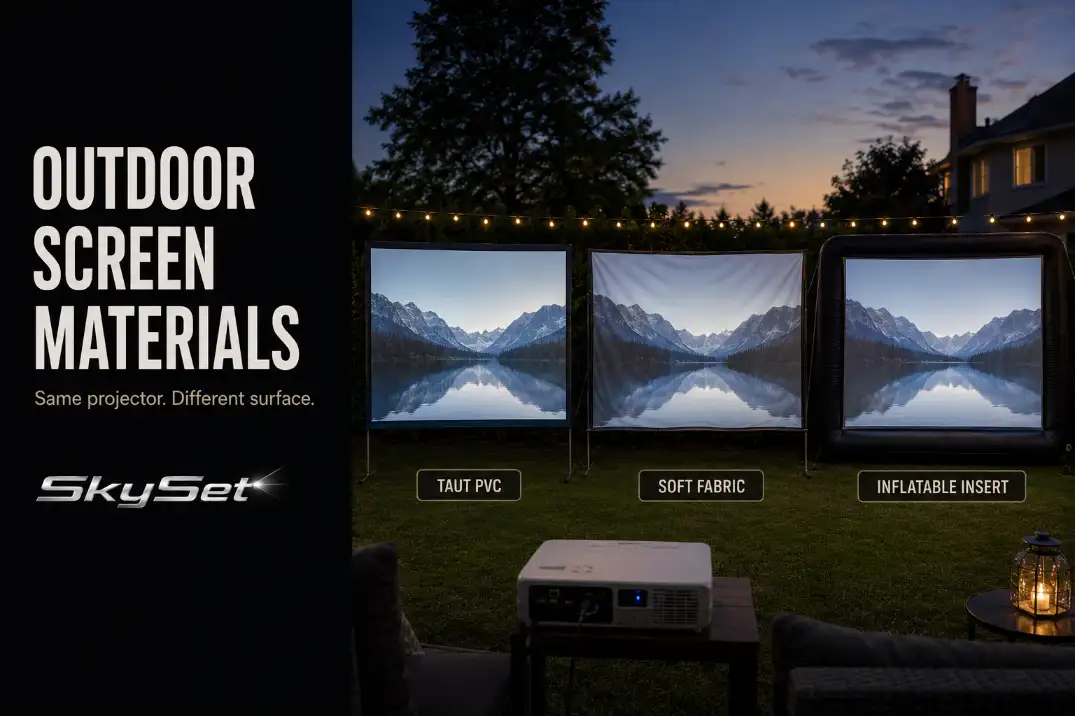
Outdoor movie screen materials compared in a backyard setup showing taut PVC, soft fabric, and an inflatable screen insert.

Outdoor movie screen material matters most when it changes surface flatness, reflected brightness, backing control, setup stability, or storage recovery. The better screen is not always the most expensive or the biggest one. It is the material system that stays flat enough after real backyard handling: folding, drying, staking, packing, and reopening for the next … Read more

Why Outdoor Movie Screens Fail in Wind

Outdoor movie screen bowing in wind with slight frame twist and strained anchor lines in a backyard setup.

Outdoor movie screens fail in wind when the screen surface loads faster than the frame, fabric, anchors, and ground can distribute that force. The first checks are simple: fabric bowing more than 2–3 inches, a frame that no longer stays square, and anchor lines that pull almost straight upward instead of outward. Around 10–15 mph … Read more

Why Projector Specs Mislead Backyard Buyers Before Movie Night

Backyard projector setup showing a high claimed lumen number while the real outdoor screen image looks dim at dusk.

Projector specs mislead backyard buyers because the strongest-looking number on the product page is often not the number that survives the yard. The first checks are not complicated: whether brightness is listed in ANSI lumens, whether the screen still looks washed out 20–40 minutes after sunset, whether the speaker reaches the back row, and whether … Read more

Outdoor Projector Image Problems at Dusk

Outdoor projector screen at dusk with a pale image caused by bright twilight sky overpowering the picture.

Outdoor projector image problems at dusk are usually not a projector failure first. The common pattern is sky-to-screen contrast failure: the projector is working, the screen is visible, but the sky is still bright enough to make blacks look gray and faces look flat. Before changing settings or blaming lumens, check four things in order: … Read more

Outdoor Projector Placement Problems That Ruin the Picture

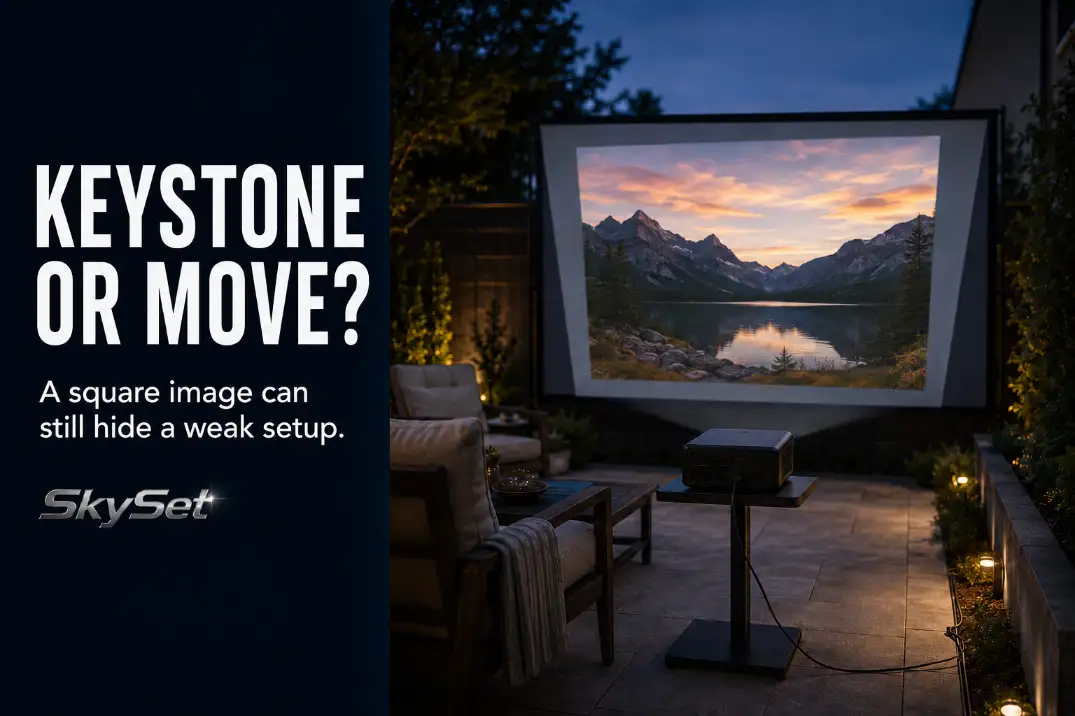
Outdoor projector placed too low and off center causing a tilted trapezoid image on a backyard movie screen.

Outdoor projector placement problems usually start with geometry, not picture quality. If the image is cropped, trapezoid-shaped, soft on one edge, drifting during the movie, or forcing people to walk through the beam, the first checks are throw distance, lens height, centerline, ground level, cable route, and seating angle. Brightness can matter outdoors, but brightness … Read more