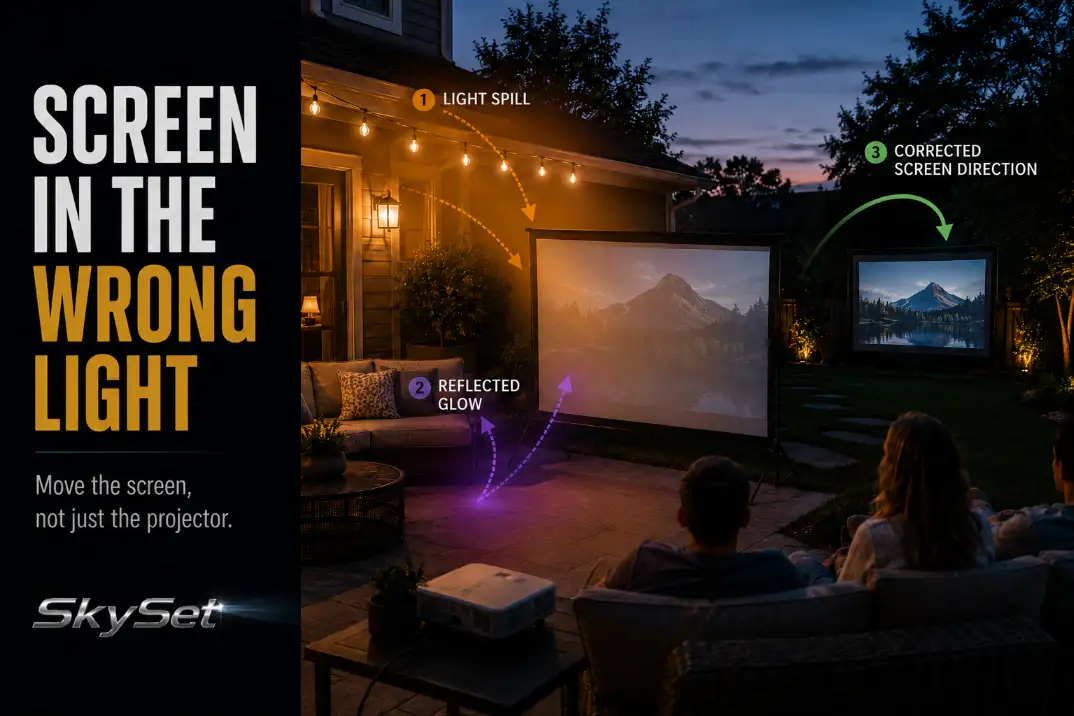
An outdoor movie screen can be in the right part of the yard and still be in the wrong light. Patio lights, house windows, pale fences, and side fixtures can weaken the picture before projector brightness becomes the real issue.
The useful decision is not simply where the screen fits. It is where the screen face can stay out of direct light, reflected light, side spill, and bright glow behind the viewers’ eyes.
Treat the yard like a light map before you commit to the setup. Find where light lands, where it bounces, and what the audience will see while looking toward the screen. That field check usually gives you a better screen position than measuring the projector distance first.
Find the Brightest Nearby Surface
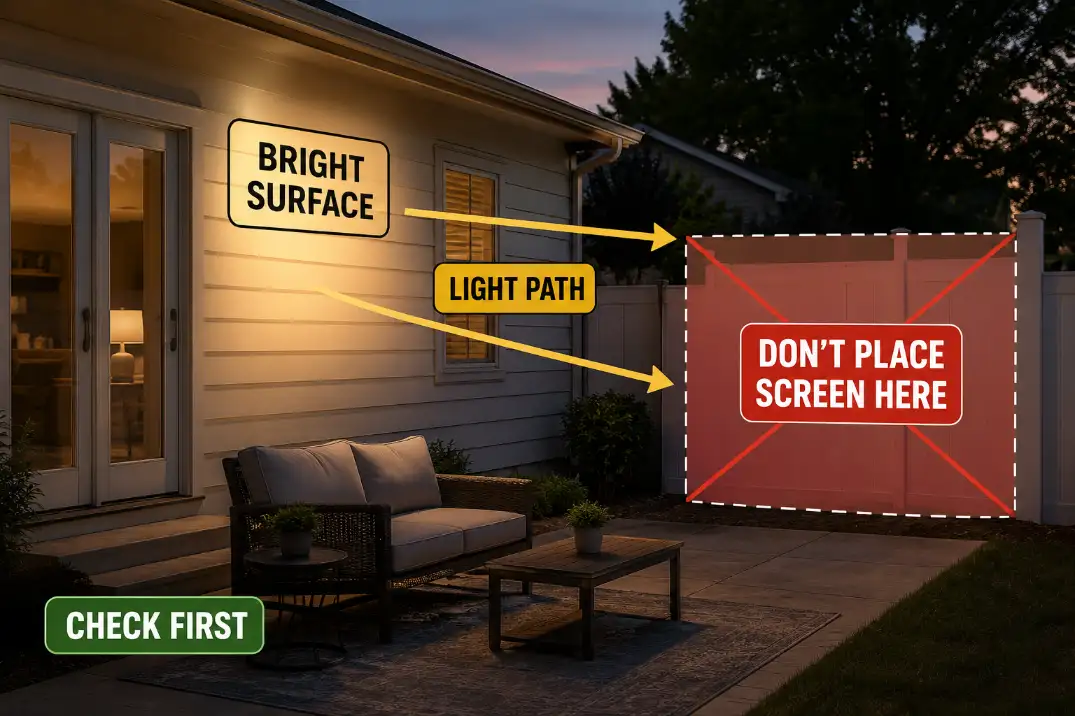
Start with the surface that looks brightest near the patio, because that surface shows where unwanted light is already landing.
A wall sconce may look like the problem, but the stronger clue may be the pale siding beside it. String lights may feel soft, but light concrete below them can glow enough to weaken the lower part of the screen. White vinyl fencing, glossy tabletops, glass doors, bright stone, and light trim all deserve a quick look before the screen goes up.
Stand where the screen might go and look back toward the house or patio. If one surface is already standing out before the yard is fully dark, treat that area as a warning zone. A screen placed in that same path will usually look flatter, especially during darker scenes.
This is the common daylight mistake: an open wall or fence panel looks convenient, but at night it may sit exactly where patio light is already collecting.
If the image is already weak before the yard is fully dark, that clue connects closely with outdoor projector image problems at dusk, but this page stays focused on the screen position rather than projector performance.
Face the Screen Away From House Lights
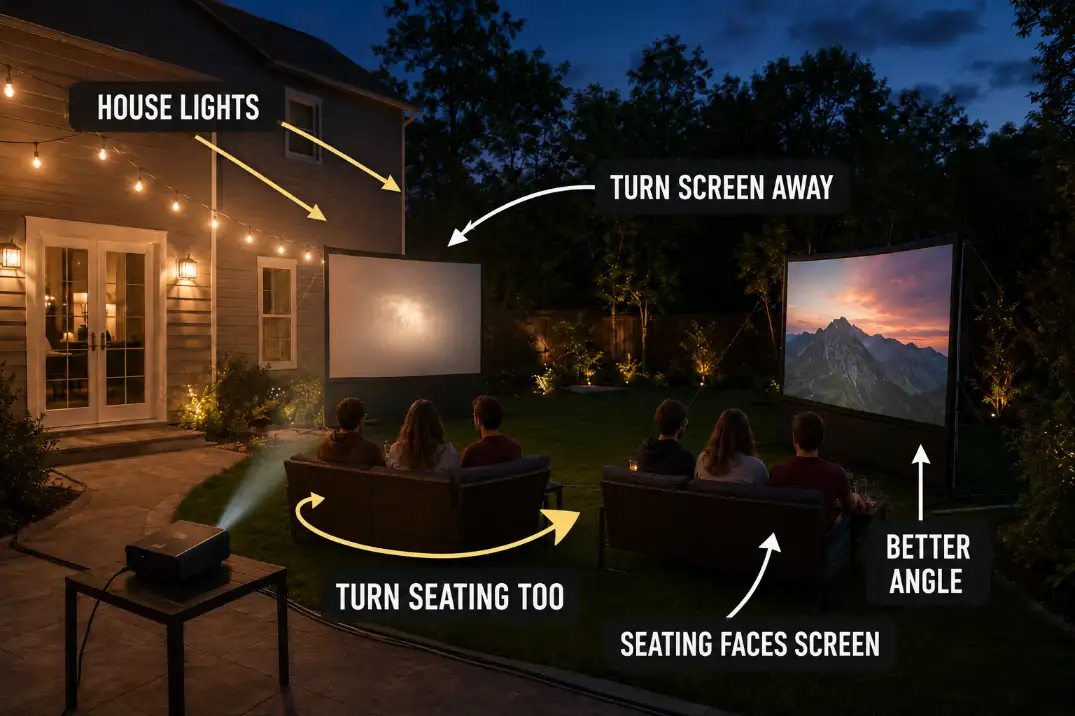
The screen face should not aim back into the brightest house-side light field. Angle matters more than simple distance.
A screen facing the house may pick up patio-door glow, wall sconces, kitchen spill, porch lights, or string lights near the roofline. Even when the screen is not directly under a fixture, the viewing direction can feel too bright because the audience is looking toward the lit side of the yard.
For a portable screen, rotate the setup so the screen face points away from the house lights when possible. The projector can still sit near the seating area, but the screen should not behave like a flat target for patio spill.
The screen face is the decision point
Do not judge the location only by where the frame fits. Stand in front of the proposed screen position and imagine the fabric stretched across it. Ask what light would hit that surface.
If the house lights are aimed toward that face, shift the screen to a darker edge of the yard or rotate it so the house lights fall behind the screen or off to one side. A small angle change can matter more than moving the entire setup across the lawn.
This is especially useful when the patio is the only practical seating zone. You may not be able to move the chairs far, but you can often rotate the screen so the house no longer becomes the bright background of the movie.
When the projector itself is also hard to position, keep that as a separate decision from the screen angle. The related issue is covered more directly in outdoor projector placement problems.
Watch Fence and Wall Reflection
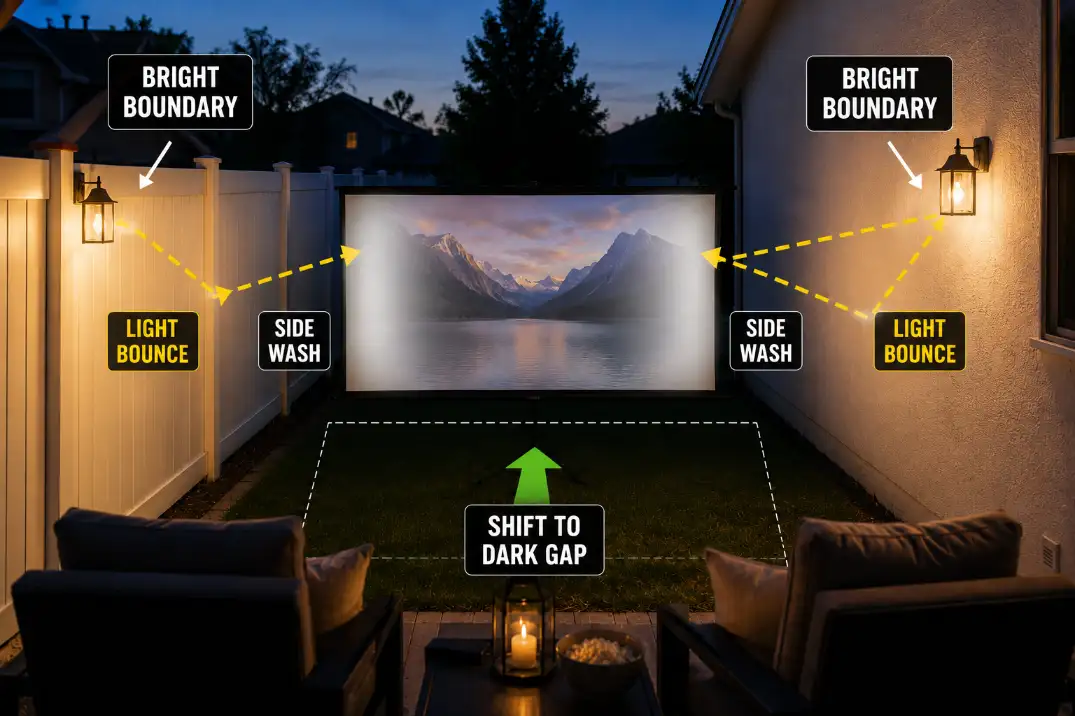
A pale fence or wall can be the hidden reflector that washes the screen even when no fixture points at it.
White vinyl fencing, light stucco, painted retaining walls, pale siding, and light-colored privacy panels can throw patio light back across the viewing area. From the patio, the glow may not feel harsh. On the screen, it can make one edge look softer or less contrasty.
This is most noticeable when the screen sits parallel to a bright fence line or close to a light wall. Dark scenes lose depth first, then midtones start to look gray.
The fix is not always a large move. Shifting the screen a few feet off the reflective boundary or angling it away from that surface may be enough to keep reflected light from crossing the fabric.
Editorial note:
The worst light source is not always the fixture you notice first. Often, it is the pale surface that catches that light and sends it back toward the screen or viewer.
Avoid Window Glow Behind the Seating Area
Check the view from the seats, because a bright window behind the audience can weaken the movie even when the screen itself is not directly lit.
A glowing kitchen window, sliding glass door, lit living room, or reflected interior light can sit behind the viewers’ shoulders and compete with the screen. People may not call it glare, but the picture feels less rich because the eye keeps adjusting to the brighter background.
Do this check from the main seating position, not beside the projector. Sit or stand where the viewers will actually watch. If a window, glass door, or reflected indoor glow is visible near the screen line, the placement still needs a small adjustment.
Move the screen so that glow falls outside the main viewing direction, or rotate the seating and screen together. The goal is not to redesign the house lighting. It is to keep the movie view from sharing attention with a bright indoor rectangle.
Keep the Screen Out of Side Spill
Side spill is the angled light that clips the screen from the side. It is easy to miss because the screen may look fine straight on while one edge is being washed from the patio edge.
Common sources include string lights along a pergola, wall sconces near a patio door, path lights along a side walk, step lights, grill lights, and side-yard security lights. These lights may not hit the whole screen, but they can fade one edge or create a brighter strip across the fabric.
Look at the screen location from the side of the patio. If a fixture can “see” the screen face from an angle, the screen may catch spill. A small rotation, a slight shift away from the patio edge, or moving the screen beyond the diagonal wash can clean up the image without changing the whole setup.
Side spill usually shows up at the edge first
If one side of the picture looks weaker than the other, do not blame the projector first. Check whether light is crossing the screen from one side.
This is where screen placement and screen type can overlap. A fixed screen may limit how much you can adjust the angle, while a portable screen can usually be rotated or moved more easily. That broader tradeoff belongs in fixed-frame vs portable outdoor movie screens, but for this decision, the placement rule is simple: keep the screen face outside the side-spill path.
Test the Placement Before Full Darkness
Test the screen position at late dusk, while patio lights, house windows, and reflective surfaces are still visible. Once the yard is fully dark and the full setup is built, the cause of a weak image is harder to isolate.
Do the test from the seating position first. Then check the screen face and both side edges. You are not trying to create perfect darkness; you are looking for obvious light paths that will weaken the picture.
Placement test before full setup:
- Stand where the screen will go and look back toward the house for bright surfaces.
- Sit where viewers will sit and check for glowing windows behind or near the screen view.
- Look at both screen edges for side spill from patio, path, step, or grill lights.
- Rotate the screen slightly and see whether the screen face falls into a darker angle.
- Shift the screen away from pale fences, bright walls, or reflective glass if one side looks washed.
- Set up the full projector, seating, and sound only after the screen passes this light check.
A good outdoor screen position is found before the projector does all the work. Read where light lands, where it bounces, and what the viewers see from the seats. Then rotate, shift, and set up fully only after the screen is out of the worst light.
For broader outdoor lighting guidance, DarkSky and the Illuminating Engineering Society outline practical ways to keep exterior light targeted and controlled in their Five Principles for Responsible Outdoor Lighting.