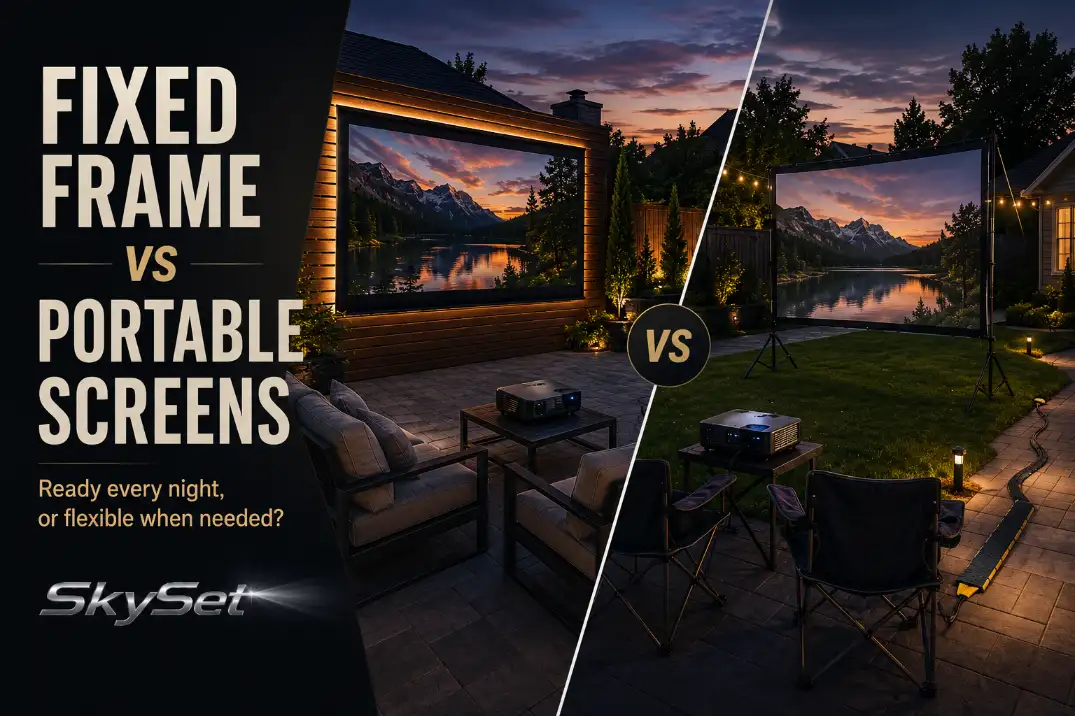
Fixed-frame and portable outdoor movie screens solve different backyard problems. A fixed-frame screen is about readiness, repeatability, and a cleaner image surface once your outdoor theater location is proven. A portable screen is about flexibility, storage control, and being able to move movie night around the yard.
The mistake is treating this as a simple “better screen” question. It is really a setup commitment question.
A fixed frame can be the better choice if your yard has a consistent viewing wall, fence line, pergola, or patio zone. A portable screen can be the better choice if your seating changes, your projector location changes, or you only watch outside a few times a month.
If you are still building the whole setup from scratch, compare this decision against your broader backyard movie night setup instead of choosing the screen in isolation.
| Screen type | Works best when | Watch out for |
|---|---|---|
| Fixed frame | You use the same viewing zone often | Needs a dedicated location and structure |
| Portable | You need flexible placement or storage | Adds setup, alignment, and breakdown time |
| Fixed frame | You care about flatter image tension | Can be overkill before the yard plan is proven |
| Portable | You watch occasionally or move locations | Fabric tension depends on frame quality and setup |
| Either type | The yard supports safe seating and projector placement | Poor placement can ruin both options |
Setup Time and Daily Convenience
The biggest difference between fixed-frame and portable outdoor movie screens shows up before the movie starts.
A fixed-frame screen reduces repeat work. Once the screen location is set, you are not rebuilding the frame, pulling fabric tight, checking the angle, or finding the same spot again each night. That matters if your backyard theater is used often, especially on weekends when the screen has to be ready before guests arrive or kids settle into seats.
The trade-off is commitment. A fixed-frame screen only feels convenient if the location is already right. If the screen is mounted where seating feels awkward, the projector has no clean throw path, or people have to walk through the viewing zone, the “easy” setup becomes a permanent annoyance.
A portable screen gives you more control when the yard is still changing. You can move it from lawn to patio, turn it away from a neighbor’s window, shift it for better shade, or store it when the season ends. That flexibility is useful, but it has a cost: each movie night starts with assembly, alignment, tensioning, anchoring, and breakdown.
For frequent use, fixed-frame convenience usually wins. For occasional use, mixed locations, or a yard you are still testing, portable flexibility is usually safer. Before locking in a permanent screen, make sure the viewing zone has already survived a few real movie nights.
The real convenience test
Ask one simple question: would you still set this screen up on a normal Friday night when nobody is helping?
If the answer is no, a portable screen may technically work but still reduce how often the theater gets used. If the answer is yes, the flexibility may be worth the extra steps.
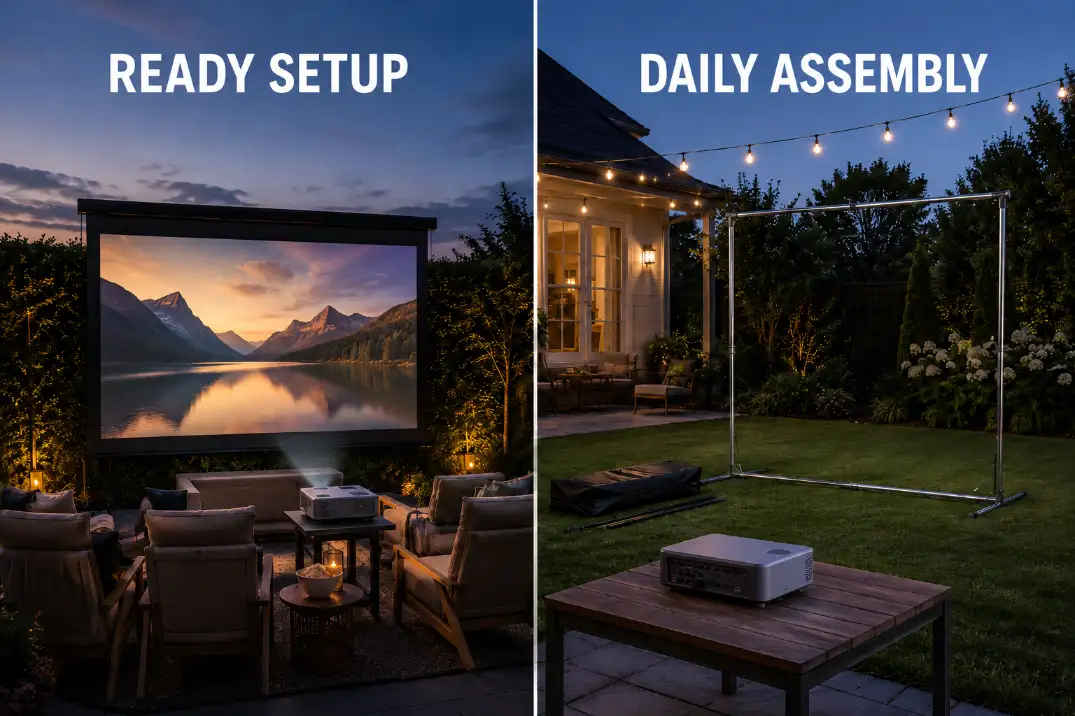
Image Flatness and Screen Tension
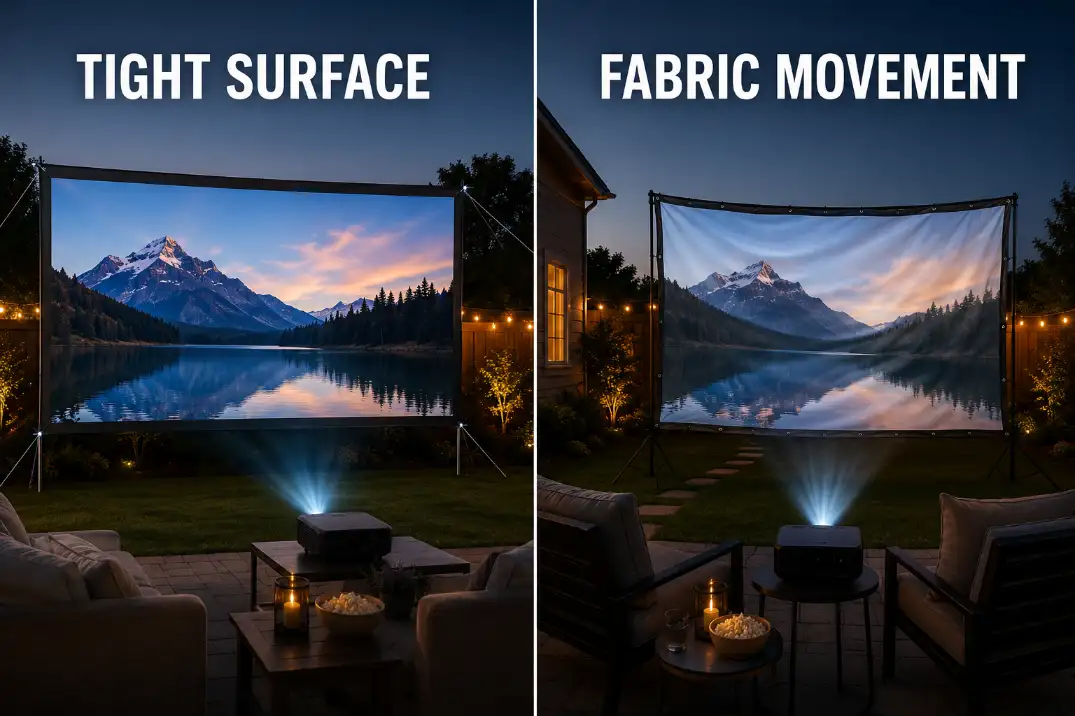
Image flatness is where fixed-frame screens can feel noticeably different. Because the surface stays attached to a frame or mounted support, the tension is usually more consistent from one viewing night to the next. The image is less likely to show edge curl, loose corners, small fabric waves, or uneven pull from repeated setup.
That does not mean every fixed-frame screen is automatically perfect. The frame still has to be square, the surface has to be installed correctly, and the support structure cannot flex or twist. A fixed screen mounted to a weak or uneven surface can still create visible distortion.
Portable screens can also look good, especially when the frame is rigid and the fabric is tensioned well. The issue is repeatability. Every time the screen is assembled, the fabric may sit slightly differently. One corner may pull tighter than another.
A light breeze may create subtle movement. A fabric screen stored too tightly or folded carelessly may show temporary wrinkles when it comes back out.
For casual family movie nights, a minor wave may not matter. For sports, subtitles, animation, gaming, or wide bright scenes, small surface problems become easier to notice.
If wrinkles and movement are already bothering you, this guide on how to prevent wrinkles in outdoor projector screens is a better next step than simply buying a bigger screen.
Practical note: A flatter screen protects only one part of the picture. It will not fix a weak projector, poor dusk timing, or a beam path people walk through. Treat tension as the image-surface decision, not the whole picture-quality decision.
Storage Space and Breakdown Needs
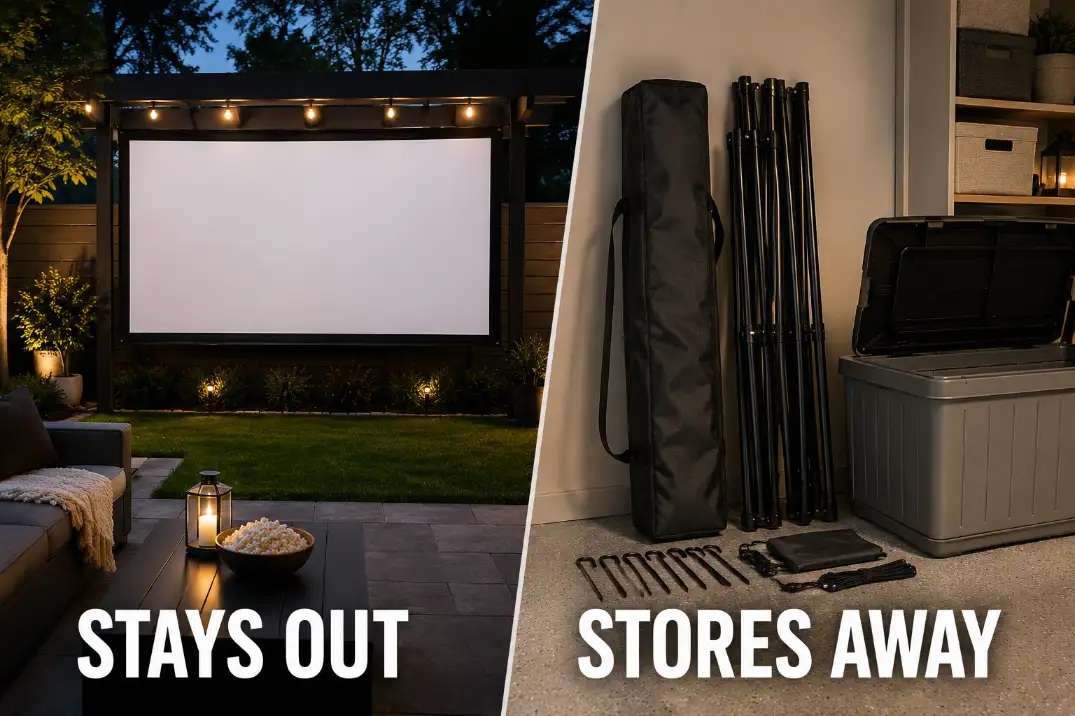
A fixed-frame screen reduces nightly breakdown, but it does not remove storage thinking. It changes the storage question into an exposure question.
If the screen stays outside, it needs a location that makes sense through normal weather, sprinklers, dust, pollen, pets, kids, and seasonal changes. Some fixed-frame setups belong under a covered patio or against a protected structure. Others may need seasonal removal or a cover depending on the screen design and manufacturer guidance.
Portable screens make the opposite trade. They disappear when movie night is over, but they need somewhere to go. That means the frame, fabric, carry bag, stakes, guy lines, feet, and small hardware need a dry, reachable storage spot. A garage shelf works. A shed can work if it stays dry. A closet can work for smaller screens. A damp corner of the patio is not really storage.
The decision is less about whether you “have storage” and more about whether storage is easy enough that you will actually use the screen. If breakdown turns into a long search for bags, stakes, and missing frame pieces, the portable setup becomes less convenient than it looked online.
A fixed frame fits homeowners who can leave the screen zone in place without it feeling like clutter. A portable screen fits homeowners who would rather pack everything away than give a wall, fence, or patio edge to a permanent theater setup.
Yard Size and Screen Position
A fixed-frame screen needs a reliable screen position. That means the yard has one direction that already makes sense: seating faces it naturally, the projector can aim cleanly, cords can stay out of walking paths, and the screen does not block a gate, grill zone, sliding door, or main patio route.
This is why fixed-frame screens often work better along a stable wall, fence line, pergola bay, or dedicated patio edge. The screen is not just a surface. It becomes part of the outdoor room.
Portable screens are more forgiving when the yard does not have one perfect theater wall. A small patio may need the screen turned one way for adults and another way for kids. A lawn may work better in spring than late summer because of sun angle or seating comfort. A side yard may be usable for one night but not worth a permanent screen.
When a fixed frame fits the yard
A fixed-frame screen makes sense when the screen position is already proven. The seating angle should feel natural. The projector should have a stable place to sit or mount. People should not have to step through the beam path to reach the house. Power and AV cables should be able to run along edges rather than across the middle of the patio.
If any of those pieces are uncertain, solve placement first. Many screen problems are really projector and traffic-flow problems. This is where outdoor projector placement problems can matter more than the screen type itself.
When portable placement is safer
A portable screen is safer when the yard is still in testing mode. You can shift it to avoid a walkway, turn it to reduce light from the house, or move it away from a neighbor-facing direction. That flexibility is especially helpful in small yards, narrow patios, and yards where furniture changes often.
The weak point is cable routing. A portable screen often encourages people to move the whole theater into a spot where cords, speakers, or projector stands end up crossing the walking path. If your screen position changes often, plan the cable path with the same care as the screen. A clean outdoor AV cable route can be the difference between a flexible setup and a trip hazard.
Stability Without Overbuilding
Stability is not the same as making the screen permanent.
A fixed-frame screen feels stable because it is attached to a structure, but the structure has to be appropriate. A solid wall, strong fence section, or well-supported frame can make sense. A weak fence panel, loose post, flexible railing, or decorative garden structure can create movement, rattling, or long-term stress.
A portable screen needs enough restraint for normal outdoor movement. That may mean stakes in soft ground, weighted feet on a patio, guy lines in the right direction, or choosing a more protected zone near a fence or wall. It does not mean treating every portable screen like a storm-rated structure.
The danger is overbuilding the wrong solution. Some homeowners try to make a portable screen behave like a permanent wall. Others mount a fixed screen in an exposed area because they assume fixed means stable. Both choices can fail if the yard is windy, uneven, or open on the wrong side.
For a tall screen in an exposed lawn, portable may need more restraint than you expected. For a protected patio with a consistent wall, fixed-frame may need less daily fuss.
If wind has already been part of the problem, read the deeper guide on outdoor movie screen wind failure before deciding that a heavier screen alone will solve it.
Where people go wrong: Do not choose a fixed-frame screen just because portable setup feels annoying. If the screen direction, wind edge, or walking path is wrong, the fixed frame makes the problem permanent instead of solving it.
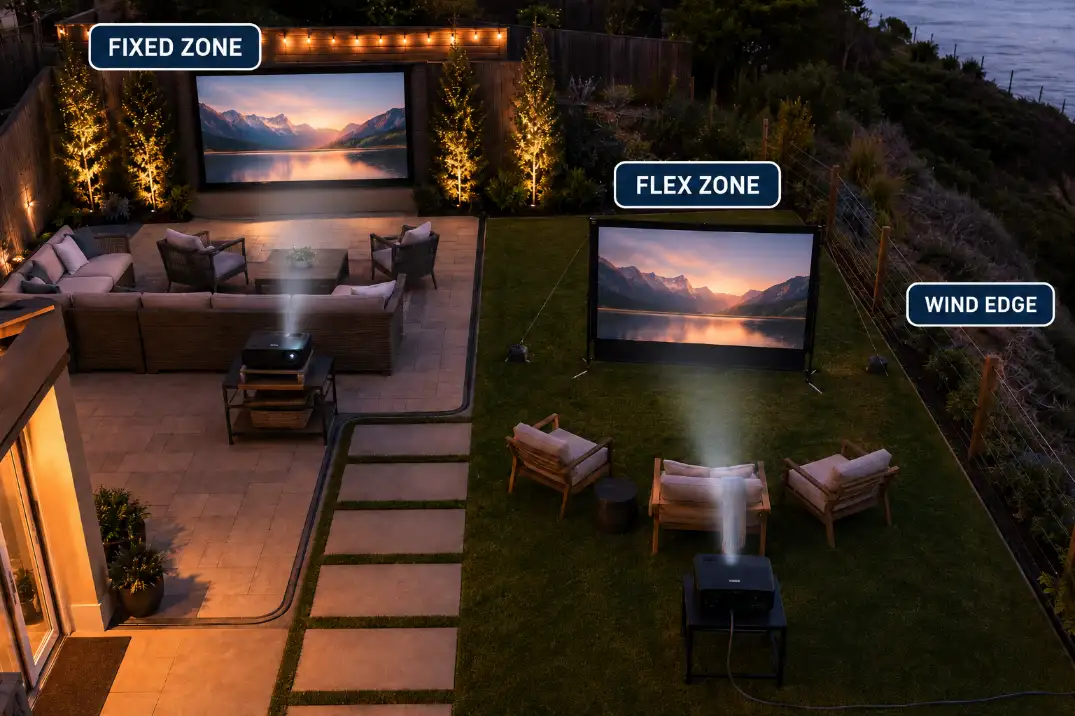
Which Screen Type Fits Your Setup
The best choice is the one that matches your actual use pattern.
Choose a fixed-frame outdoor movie screen if your yard already has a proven theater zone. You know where seating goes. You know where the projector works. You are not moving the screen every other night. You care about a flatter image, a cleaner setup, and less assembly before each movie.
Choose a portable outdoor movie screen if your yard still needs flexibility. You may use the patio one night and the lawn another night. You may store everything after each use. You may want to test screen size, seating direction, projector distance, and sound placement before committing to a permanent screen position.
| Your setup condition | Better fit | Why |
|---|---|---|
| Same movie zone every week | Fixed frame | Reduces repeat setup and keeps the screen ready |
| Occasional movie nights | Portable | Setup friction is easier to tolerate |
| Strong image-flatness expectations | Fixed frame | Usually supports more consistent tension |
| Small or changing yard layout | Portable | Lets you test different screen positions |
| Exposed wind edge or uncertain placement | Portable first | Test the location before building around it |
A good middle path is to start portable, use it through several real movie nights, and then upgrade to fixed-frame only after the viewing location proves itself.
That prevents you from building a permanent screen around a patio angle, projector distance, or seating layout that looked good once but feels awkward in regular use.
If you are comparing this screen choice as part of a larger backyard theater plan, the broader portable vs permanent backyard theater decision can help you decide how much of the setup should stay in place. The screen should match that larger direction.
Fixed-frame is best when your yard can support permanent readiness. Portable is best when flexibility, storage control, and location testing matter more.
The right answer is not the screen that looks most polished in a product photo. It is the screen you will still want to use after the first few movie nights are over.