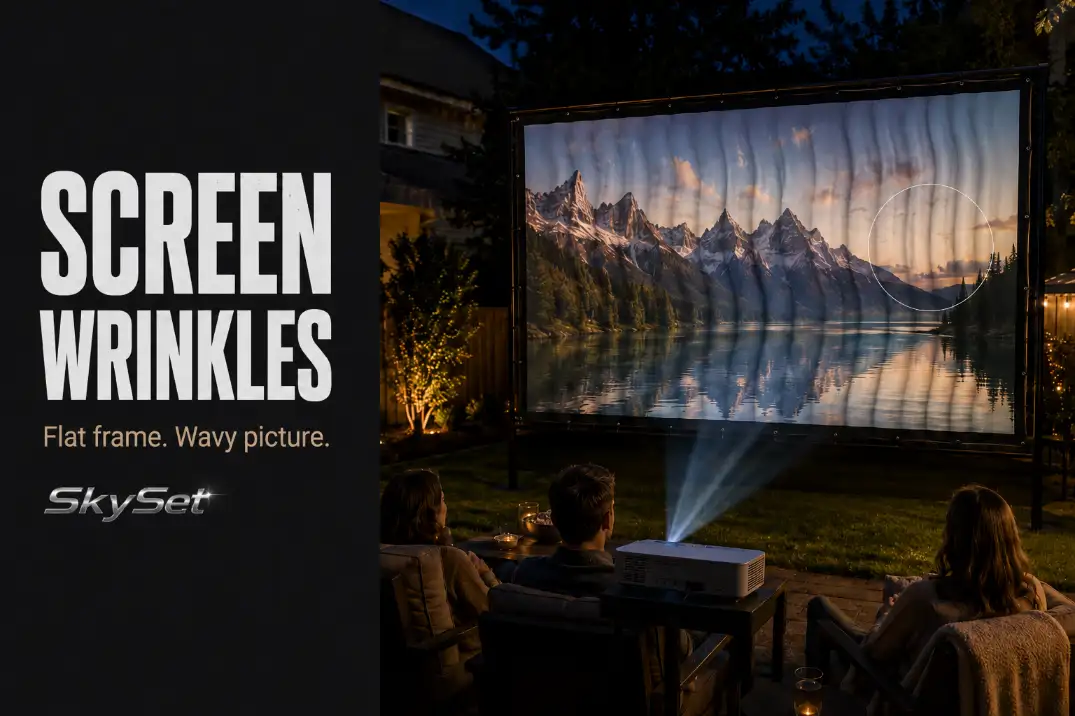
Outdoor projector screen wrinkles usually come from uneven tension, fold memory, damp storage, or a screen material that no longer relaxes flat.
The fastest prevention routine is simple: open the screen 20–30 minutes before movie time, square the frame, tighten the fabric evenly, and never pack the surface while it is damp or cool to the touch.
The first useful test is not a movie scene. Project a plain white or light gray image for 30–60 seconds from the normal seating distance, usually about 10–12 feet for many backyard setups.
If the line only appears when the projector is on, it may be a surface-angle or alignment issue. If the crease is visible with the projector off and still shows after 24–48 hours of relaxed hanging, the material may have taken a permanent set.
Quick Flatness Check
Before changing the screen or pulling harder, check five things in order:
- View the screen from the actual seating position, not from 2 feet away.
- Use a still white or gray test image for 30–60 seconds.
- Check whether the crease is visible with the projector off.
- Measure the frame diagonals; on a 100–120 inch screen, they should be within about 1/2 inch of each other.
- Let a packed or folded screen hang flat for 24–48 hours before deciding it is ruined.
That sequence prevents the most common mistake: treating every wrinkle as loose fabric.
Why Wrinkles Show More at Night
Projection turns small waves into contrast
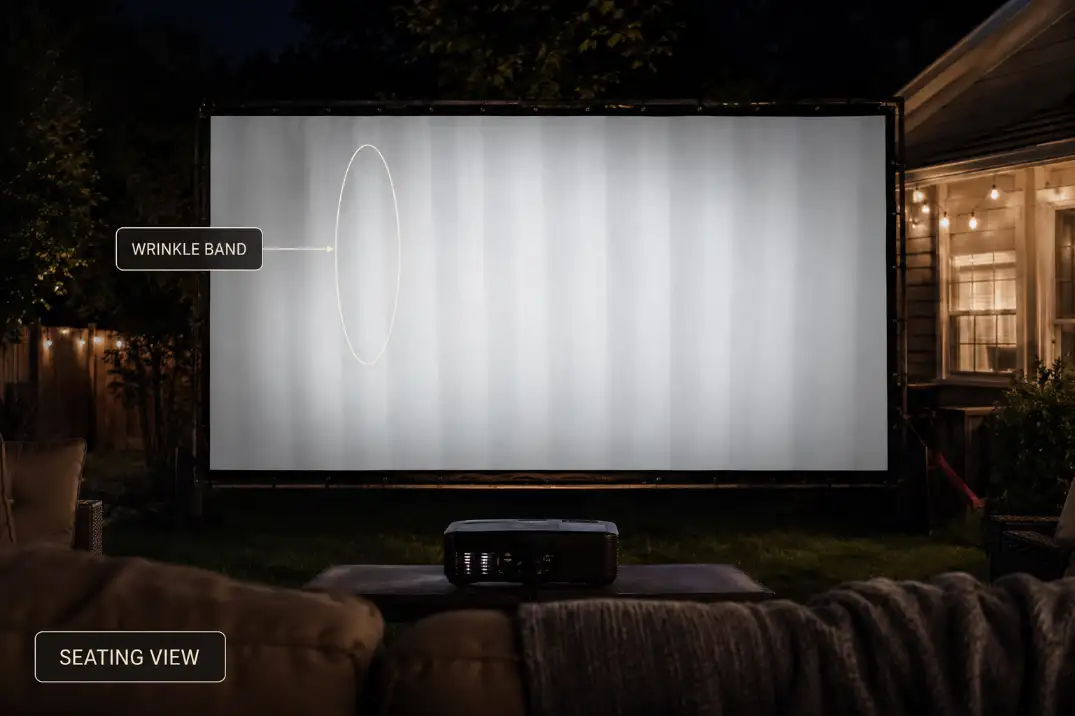
A wrinkle is not just a line in the fabric. It is a small change in surface angle. When projector light hits that raised or dipped area, one side can catch more light while the other side falls slightly darker.
At night, that contrast makes a shallow ripple look much more obvious than it did during setup.
This is why a screen can look acceptable at 6:30 p.m. and distracting by 8:30 p.m. Bright skies, subtitles, pale walls, snow scenes, and test screens reveal surface waves faster than dark movie scenes.
If the image is already weak at dusk, wrinkles become even easier to notice because the picture has less contrast reserve to hide fabric texture.
That overlap is why screen flatness should be judged separately from broader dusk visibility problems like those covered in Outdoor Projector Image Problems at Dusk.
Wrinkle, alignment, or keystone?
A true wrinkle stays attached to the same spot on the screen surface. An alignment problem changes with projector angle.
If you move the projector slightly, reduce keystone correction, or center the lens better and the distortion changes, the screen may not be the main problem.
This distinction matters because a slightly uneven screen can look much worse when the projector is off-center. Heavy digital keystone correction does not create fabric wrinkles, but it can make surface flaws easier to see.
Before replacing a screen, confirm the projector is aimed squarely at the screen, especially in small yards or patios where placement gets compromised. Outdoor Projector Placement Problems explains that alignment issue more directly.
Fabric Tension and Frame Support
Even tension beats maximum tension
The most useful fix is usually not more force. It is better balance. Outdoor screens need the top edge, side edges, and bottom edge to share the load.
If one corner is much tighter than the opposite corner, the fabric forms diagonal stress lines that look like wrinkles but are really tension paths.
Start with the frame. On a freestanding screen, measure diagonally from corner to corner. If the two diagonal measurements differ by more than about 1/2 inch on a 100–120 inch screen, square the frame before touching the fabric again.
A frame that is slightly twisted can make a good screen material look defective.
Then tighten in small passes around the frame. Do not fully tighten one corner, then move to the next. Work around the screen gradually so the fabric relaxes evenly.
If the wrinkle shifts from one side to another after tightening, that is a sign of uneven pull, not a solved flatness problem.
Wind makes tension problems look random
A screen that moves in 8–12 mph gusts will rarely hold a clean surface unless the frame is braced well. Wind does not have to knock the screen over to create wrinkles.
It only has to flex the top bar, twist the side supports, or keep the fabric moving during projection.
This is the condition many people underestimate. They blame the fabric because the wrinkle is visible on the fabric, but the mechanism is frame movement.
If the screen ripples only when the air moves, solve the stability problem before judging the material. Outdoor Movie Screens and Wind Failure is the stronger reference when the wrinkle appears and disappears with gusts.
| What you see | More likely cause | First useful check |
|---|---|---|
| Vertical bands near center | Top edge sag or loose lower edge | Check top bar level and bottom tension |
| Diagonal lines from corners | Uneven corner pull | Compare opposite strap tension |
| Sharp straight fold line | Storage crease | Hang flat for 24–48 hours |
| Side waves only | Frame out of square | Measure both frame diagonals |
| Wrinkles worse in wind | Frame movement | Brace the screen before tightening fabric |
Pro Tip: Tighten in small, alternating passes. A screen can be tight and still be wrong if the pull is uneven.
Storage Mistakes That Create Creases
Folding creates memory faster than setup does
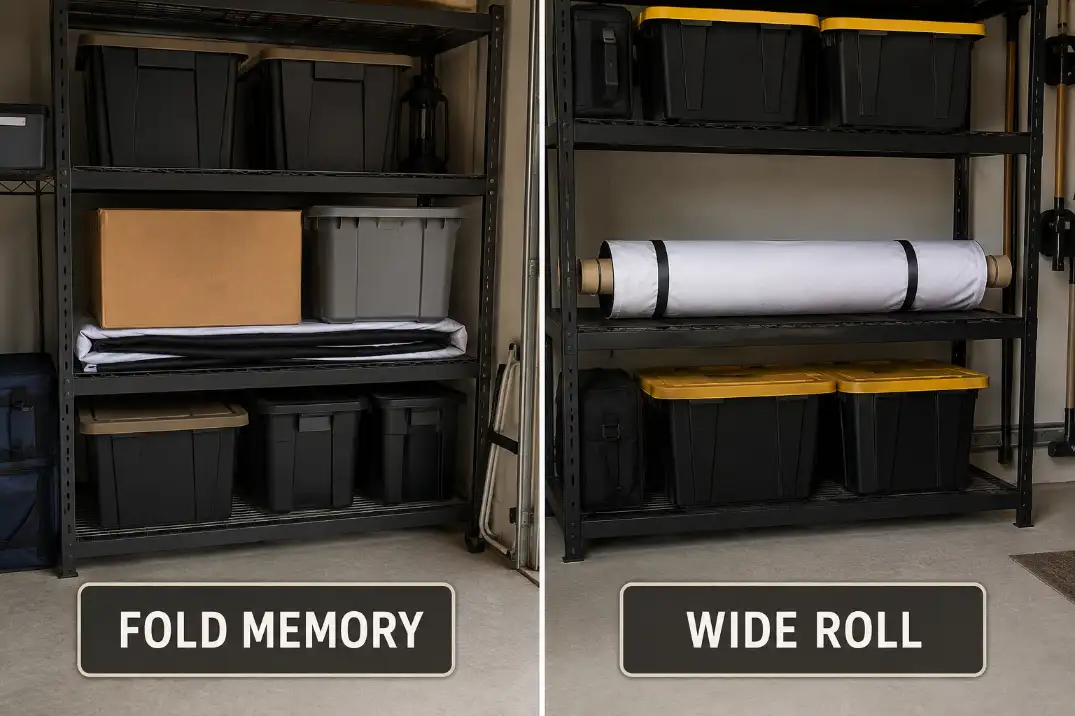
Most stubborn creases start after the movie night, not during it. Folding the screen along the same lines after every use creates pressure memory. Over time, those lines become sharper and less willing to relax.
Rolling is usually safer than folding. A 4–6 inch roll diameter is much better than a tight hand roll because the fabric bends less sharply. If the screen came with a storage tube, use it. If it came with a bag, avoid stuffing the fabric into the smallest possible shape just because it fits.
The worst habit is packing the screen while it is damp. After a cool evening, dew can settle before the surface looks obviously wet.
In humid areas such as Florida or along the Gulf Coast, the screen may need 30–60 minutes of drying time before storage. If the surface still feels cool, limp, or slightly tacky, do not compress it.
Heat and pressure lock in the mistake
A folded screen left in a hot garage, car trunk, or storage bin under heavy items can develop harder creases. Heat softens many flexible materials just enough for the fold to settle in. Pressure keeps the line sharp. When the screen cools, that shape may remain.
A better routine is dry, roll, store without weight, and avoid tight bends. For portable backyard setups, that routine matters as much as the screen brand.
A mid-range screen stored carefully will often stay flatter than a better screen repeatedly folded damp and pressed under gear.
Screen Material and Flatness
Material choice changes how forgiving the screen is
Screen thickness alone does not prevent wrinkles. A heavier material can still crease if it is folded sharply or pulled unevenly. A thin fabric screen can look surprisingly good if the frame is square and the storage routine is careful.
The useful question is not “Is it thick?” It is “How does this material behave when packed, tensioned, and projected on?”
Fabric screens are convenient and light, but they can show soft waves if the frame support is weak. PVC-style surfaces often look smoother when mounted well, but they may hold pressure marks if folded tightly.
Stretch materials can hide small ripples, but overpulling can distort the image geometry. Inflatable or detachable screens depend heavily on even edge support; if the structure shifts, the picture surface follows.
For a deeper buying decision, Outdoor Movie Screen Materials is the better place to compare fabric, PVC-style surfaces, gain, texture, viewing angle, and storage behavior together.
Brighter is not always flatter-looking
People often overestimate screen brightness and underestimate texture. A more reflective screen can make small waves easier to see because the light changes more sharply across each ripple.
A matte white surface is usually more forgiving for casual backyard viewing, mixed seating angles, and portable frames.
Higher-gain surfaces can help in some brightness-limited setups, but they punish poor alignment and uneven fabric more quickly.
If the setup is packed away after every use, moved around the yard, or shared by viewers sitting off to the side, forgiving flatness may matter more than maximum reflectivity.
When Pulling Tighter Makes It Worse
Overtightening creates stress lines
Pulling tighter helps only when the screen is evenly loose. If the frame is out of square, the top bar is flexing, or one corner is already overloaded, extra tension can turn soft waves into diagonal stress lines. The screen may look flatter in one area and worse in another.
Use this order instead:
- Square and level the frame.
- Attach the screen loosely.
- Tighten opposite corners in small increments.
- Check the bottom edge, not just the top corners.
- Project a flat test image from the normal seating position.
If the same line returns within 10 minutes, the issue is probably not simple looseness. If a line changes direction after tightening, the problem is uneven tension. If the line stays exactly where the screen was folded, storage memory is more likely.
Heat is a last controlled step, not the first fix
Some screen materials may relax with time, mild warmth, or manufacturer-approved heat treatment. That does not mean every screen should be attacked with a hair dryer, iron, steamer, or wrinkle spray.
The safer recovery order is: hang it flat for 24–48 hours, correct the frame, rebalance tension, then check the manufacturer’s care guidance.
If controlled low heat is allowed, it should usually be applied cautiously from the back side, not blasted onto the projection surface.
High heat can create shiny spots, coating damage, warping, or permanent texture changes that look worse under projection than the original wrinkle.
A routine fix stops making sense when the fabric surface itself has changed. If the crease is visible with the projector off, survives two nights of relaxed hanging, and does not respond to correct frame tension, more pulling is only moving the distortion around.
When the Screen Should Be Replaced
Replacement is about recovery failure, not annoyance
Do not replace a screen after one bad setup. Replace it when the screen can no longer recover a flat enough surface under normal conditions.
A sharp crease that remains visible with the projector off after 24–48 hours is a stronger replacement signal than a soft wave that disappears after the frame is squared.
Uneven stretch is another sign. If the frame is stable, the diagonals are close, the projector is centered, and the fabric still forms permanent waves, the material may have lost its shape. At that point, repeated tightening becomes wasted effort.
For homeowners who are deciding whether to stay portable or move toward a more supported setup, Portable vs Permanent Backyard Theater helps separate convenience from long-term flatness, storage, and stability tradeoffs.
Do not upgrade only the screen if the whole setup is causing the wrinkle
A replacement screen will not solve a twisting frame, a gusty open lawn, poor projector alignment, or a storage routine that folds damp material under weight. If the screen is only one weak point in the system, fix the setup pattern before buying another surface.
That is where a broader setup review can be more useful than another screen-only purchase. If the goal is a cleaner recurring movie night, Best Backyard Movie Setup is the better affiliate-supported cluster path because it looks at the screen, projector, sound, seating, and power as one working backyard system.
The practical rule is simple: prevent wrinkles before they become creases. Open the screen early, keep the frame square, tighten evenly, let damp surfaces dry, roll instead of forcing tight folds, and stop pulling harder when the wrinkle is really frame movement or storage memory.
A good outdoor screen does not need maximum tension. It needs even support, careful storage, and enough recovery time to stay flat under projection.
For broader official guidance on rolled storage principles for large fabric objects, see the National Park Service rolled storage guidance.